Paris
The Hunchback of Notre DameParis is the novel’s principal setting, but it is more than a backdrop: its streets and monuments preserve the city’s history while directing the characters into scenes of spectacle, danger, and confinement. In 1482, it is a vast yet still architecturally coherent capital divided among the island City, the right-bank Town, and the University Quarter of Paris on the left bank. From the towers of Notre-Dame Cathedral, the city can be read as a whole; at street level, its twisting lanes and sharply divided spaces make it difficult to navigate or escape.
Setting and the Three-Part City
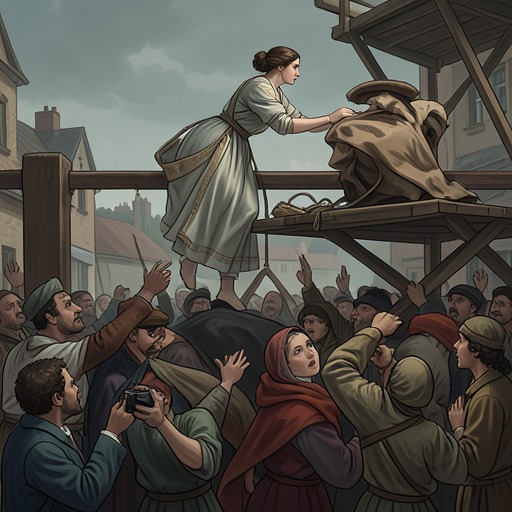
The novel opens on January 6, 1482, when bells ring throughout Paris and crowds gather for the combined observances of Epiphany and the Feast of Fools. The day’s attractions are distributed across the city: a bonfire is planned for Place de Grève, a maypole for another site, and a mystery play for the Grand Hall of the Palais de Justice. Citizens shut their houses and shops and stream toward the celebrations. The crowds favor the bonfire and the play, leaving the maypole exposed to the January sky. The Flemish ambassadors, recently arrived in Paris, are expected at the play and at the election of the Pope of the Fools, making the public festivities a meeting point for civic life and political display.
The city’s underlying plan is less unified than this shared excitement suggests. In the fifteenth century, Paris consists of three distinct urban divisions, each with its own character, customs, privileges, and history. The City occupies the island in the Seine and is the oldest and smallest district. The Town spreads across the right bank and is the largest; the University occupies the left bank. Their characteristic institutions differ: churches concentrate in the City, palaces in the Town, and colleges in the University Quarter of Paris. Notre-Dame Cathedral belongs to the island’s landscape, while the Town’s major landmarks include the Louvre and Hôtel de Ville, and the Sorbonne stands in the University district.
These divisions have separate jurisdictions as well as distinct skylines. The island belongs to the bishop, the right bank to the provost of the merchants, and the left bank to the rector; above these authorities stands the royal provost of Paris. Yet the districts are not isolated from one another. The Seine binds and threads them together, carrying movement between their banks, while long streets run across the divisions and cross the river by bridges. From above, their local street patterns appear like tangled skeins, but the shared arteries reveal how the three parts form one urban body.
Expansion and the City’s Changing Boundaries
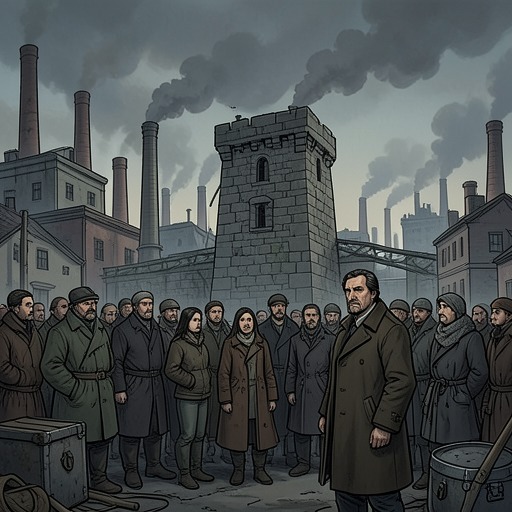
Paris grows outward from the island where it began. The island’s shoreline first serves as a boundary and the Seine as a moat; the Grand Châtelet and Petit Châtelet guard the approaches at the two bridges. As settlement spreads across the river, successive enclosures attempt to contain it. An early wall is gradually engulfed by the outward tide of houses. Philip Augustus builds a new circuit of strong towers, but houses crowd within it, rise above one another, and eventually spill across the boundary into the surrounding plain.
From 1367, expansion into the suburbs makes another wall necessary, particularly on the right bank, and Charles V builds it. That enclosure, too, is overtaken. By the end of the fifteenth century, the Faubourg has crossed beyond it; under Louis XI, ruined towers from earlier walls remain scattered among newer buildings like fragments of a submerged city. The narrative stresses both Paris’s scale and the cost of its growth: it has increased by only about one-third since the time of Louis XI, yet, in the narrator’s judgment, has lost more in beauty than it has gained in size. The repeated failure of walls to restrain the city turns urban expansion into a visible record of accumulated generations.
The river-crossed capital also has a protected, enclosed character. Its bridges are crowded with houses, its gates are strong, and a deep moat supplied by the Seine runs along the walls. At night, the gates close and huge iron chains bar the river at the city’s ends. Within those defenses, however, the city continues to press outward; its boundaries are repeatedly made obsolete by the lives and buildings they were meant to contain.
Streets, Crowds, and Unequal Experiences
From Notre-Dame Cathedral’s towers, Paris appears as an intricate mass of roofs, chimneys, streets, bridges, squares, and spires. The view initially overwhelms the eye: carved gables and projecting upper stories stand beside church towers and royal buildings, each with its own form and history. The panoramic perspective makes the city seem legible as a whole, but the narrative repeatedly contrasts that elevated view with the confusion experienced by people on the ground.
After following Esmeralda through the streets at night, Pierre Gringoire loses his way in the alleys, squares, and closed courts around the ancient cemetery of the Saints-Innocents. Their circuits turn back on themselves, and he can locate himself only when he recognizes the pillory of the fish markets. Esmeralda, by contrast, proceeds without hesitation along a route that seems familiar to her. The difference makes urban knowledge a matter of position and experience: the same streets that form a pattern from above become a bewildering maze to the pedestrian who does not know them.
That maze also contains sharply contrasting forms of public life. The morning after the festival, Place de Grève remains strewn with ribbons, rags, feathers, candle wax, and crumbs from the public feast. People turn over the extinguished brands of the bonfire, discuss the day’s entertainments, and gather near the pillory in the hope of seeing an execution. Celebration and punishment occupy the same civic space, and the lingering festival debris lies alongside the machinery of public justice.
At night, the Court of Miracles presents another face of the capital. Pierre Gringoire arrives in a large, irregular, poorly paved square where fires burn among a noisy crowd. The narrator describes a community whose members appear by day as beggars and return at night to take on other roles, exposing the distance between the city’s visible social order and the lives hidden within it. In Paris, a turn from one street or square to another can mean a passage between different kinds of authority, livelihood, and danger.
Architecture, Memory, and Narrative Viewpoint
The Paris seen in the fifteenth-century narrative is described as a chronicle in stone: a city formed principally by the Romanesque period and the Gothic period. Earlier Roman remains have largely disappeared, while later architectural change will disturb the city’s relative unity. The account anticipates the Renaissance as a mixture of architectural languages and ornaments that may increase visual splendor while diminishing harmony. Buildings therefore register not only changes in taste but the passage of history through the city.
The novel makes height a way of seeing, but not a guarantee of understanding. One panoramic description gathers the whole city into view, with the Seine connecting its districts and the surrounding plain extending toward distant hills. Yet Claude Frollo, standing above that expanse, fixes his attention on Esmeralda dancing below. Similarly, during the dark night when Quasimodo watches from the Northern tower, his single eye detects what initially looks like movement along the quay; the apparent undulation advances toward the island, and a crowd eventually pours into the area before Notre-Dame Cathedral. The city’s heights offer surveillance, while its streets and riverbanks conceal the forces moving through them.
That spatial contrast becomes particularly stark after the night’s assault on Notre-Dame Cathedral. At dawn, the great door is visibly damaged, and streams of lead have hardened in crevices in the stone. The bonfire that Quasimodo lit between the towers has gone out. Tristan l’Hermite has had the square cleared and the dead thrown into the Seine; the narrator links this rapid cleanup to the concern of kings such as Louis XI with restoring the pavement after a massacre. The city remains standing, but its surfaces record the violence that official order tries to remove. Paris thus holds together the novel’s competing scales: an immense architectural history, the dense geography of ordinary movement, and the vulnerable human lives caught within its streets.